






Posted At: Oct 08, 2026 - 5 Views
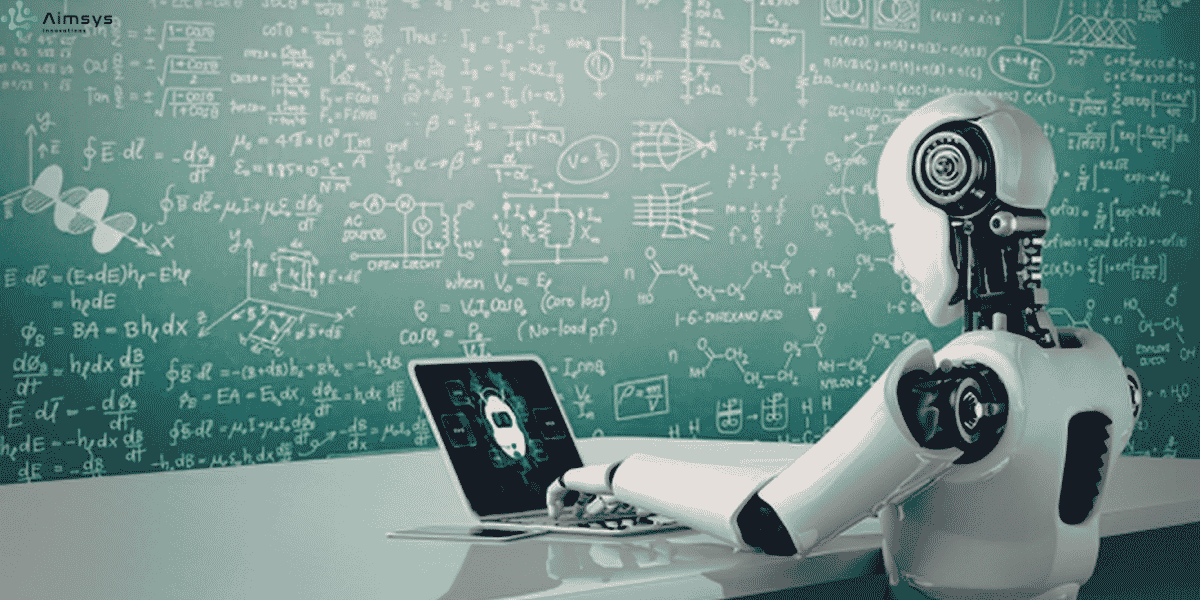
For centuries, mathematical discovery has depended on human intuition, creativity, and the ability to recognize patterns that are not immediately visible. Mathematicians may spend years exploring a problem before discovering the right approach to prove a theorem. Even when a solution seems close, finding a rigorous proof can require enormous amounts of experimentation, computation, and reasoning.
Artificial intelligence is beginning to change this process.
Modern AI systems can analyze mathematical structures, identify patterns, generate possible conjectures, explore alternative approaches, and assist researchers in constructing or verifying proofs. Rather than simply calculating answers, AI is increasingly being used as a discovery partner for mathematical reasoning.
This shift could have implications far beyond mathematics. The same technologies that help machines reason about abstract mathematical problems could influence scientific research, engineering, optimization, software development, cryptography, and other areas where complex reasoning plays an important role.
The emerging question is no longer whether AI can solve mathematical problems. It is how AI can help humans discover what is worth proving in the first place.
From Solving Equations to Discovering New Mathematics
Traditional computational systems are excellent at performing calculations. Give a computer an equation, a numerical problem, or a well-defined algorithm, and it can often produce an answer extremely quickly.
Mathematical discovery is different.
A mathematician may begin with an observation, notice an unusual relationship between different structures, develop a conjecture, test it against examples, and then search for a proof. The difficult part is often not calculation but deciding which direction to explore.
AI is becoming useful at this earlier stage of the process.
Finding Hidden Patterns
AI systems can process enormous collections of mathematical examples and identify relationships that might be difficult for humans to notice manually. By examining structures, sequences, graphs, equations, or geometric relationships, AI can suggest connections that deserve further investigation.
For researchers, this can reduce the time spent searching through possibilities that ultimately lead nowhere.
Generating Mathematical Conjectures
A conjecture is an idea that appears to be true but has not yet been formally proven.
AI can analyze mathematical data and propose potential relationships or rules. Researchers can then test these suggestions, determine whether they are meaningful, and attempt to establish rigorous proofs.
This creates a new workflow in which machines generate possibilities while humans evaluate mathematical significance.
Exploring Multiple Approaches
A difficult mathematical problem may have many possible solution paths. AI can explore different transformations, representations, or proof strategies and identify approaches that appear promising.
Instead of replacing mathematical reasoning, this can give researchers a broader set of directions to investigate.
AI Is Becoming a Partner in Proof Discovery
One of the most important changes is that AI is moving from simply calculating mathematical results toward participating in the process of reasoning.
A proof is not just an answer. It is a logically structured argument showing why a mathematical statement must be true.
From Calculation to Reasoning
AI systems designed for mathematical reasoning can work with symbolic expressions, logical relationships, formal statements, and structured proof steps.
This allows AI to contribute to problems where numerical computation alone is insufficient.
The distinction is important because mathematical research often requires understanding relationships between abstract concepts rather than simply producing numerical outputs.
Exploring Proof Strategies
When researchers face a difficult theorem, there may be several possible ways to approach it. AI can help explore transformations, intermediate propositions, or previously established mathematical results that could contribute to a proof.
This can function like an intelligent search process.
Instead of examining every possibility manually, researchers can use AI to prioritize promising paths and spend more time evaluating the ideas that appear mathematically meaningful.
Supporting Formal Verification
Another important area is formal proof verification.
Formal mathematics requires every logical step to follow precisely from accepted definitions, axioms, and previously established results. AI can help translate mathematical reasoning into formal structures that can then be checked by proof-assistant systems.
This creates an important combination:
AI can help discover possible reasoning paths, while formal systems can verify whether those paths are logically valid.
The Relationship Between AI and Human Mathematical Creativity
The rise of AI in mathematics does not necessarily mean that human mathematicians become less important. In many ways, their role could become more focused on the parts of mathematics that require judgment, intuition, and creativity.
Humans Define the Interesting Questions
AI can explore thousands or millions of possible mathematical relationships, but mathematical importance is not determined only by whether something is technically true.
Researchers still need to decide which questions matter, which patterns are meaningful, and which discoveries could lead to broader mathematical understanding.
Human curiosity remains a critical part of the process.
AI Expands the Search Space
Human researchers naturally have limitations. They cannot examine every possible mathematical transformation or test every conceivable relationship.
AI can explore a much larger search space.
This does not mean that every AI-generated idea will be useful. Most possibilities may be irrelevant. However, even a small number of valuable discoveries could make AI an important research tool.
Collaboration Becomes the New Model
The most powerful model may therefore be neither humans versus AI nor AI replacing mathematicians.
Instead, it could be collaboration.
Humans can provide goals, context, intuition, and judgment, while AI can provide computational scale, pattern recognition, and rapid exploration.
Together, they can approach mathematical problems differently from either working independently.
Why Mathematical Discovery Matters Beyond Mathematics
AI-assisted mathematics may appear highly specialized, but its impact could extend into many technical and scientific fields.
Mathematics provides the foundations for areas such as optimization, cryptography, physics, engineering, computer science, statistics, and machine learning itself.
Advancing Scientific Research
Many scientific discoveries depend on mathematical models. If AI can help researchers discover new mathematical relationships or improve existing methods, those improvements could eventually influence scientific modeling and experimentation.
For example, better mathematical techniques can help describe complex physical systems, optimize simulations, or analyze large scientific datasets.
Improving Engineering and Optimization
Engineering problems frequently involve finding the best solution among many possibilities.
AI-assisted mathematical reasoning could help discover better optimization strategies for areas such as logistics, energy systems, manufacturing, network design, and resource allocation.
The value comes not simply from solving a known optimization problem faster, but potentially from discovering better mathematical approaches to solving entire classes of problems.
Supporting Software and Computing
Mathematical reasoning also plays an important role in algorithms, cryptography, verification, and computer science.
AI-assisted proof discovery could contribute to the development and verification of algorithms, helping researchers explore more reliable approaches to complex computational problems.
The Growing Importance of Trust and Verification
As AI becomes more involved in mathematical reasoning, one challenge becomes especially important: How do we know an AI-generated proof or conjecture is correct?
AI systems can generate convincing-looking reasoning that may contain subtle errors. In mathematics, an apparently small logical mistake can invalidate an entire argument.
Mathematical Accuracy Cannot Depend on Confidence
An AI system sounding certain does not make a mathematical statement true.
This makes verification especially important.
Researchers need systems that can distinguish between a promising idea and a formally valid proof. Automated verification tools and formal proof environments can provide an additional layer of confidence.
Transparency Matters
Researchers also need to understand how an AI arrived at a proposed solution.
A system that simply produces an unexplained conclusion may be less useful than one that provides a structured chain of reasoning that humans can inspect, challenge, and verify.
For mathematical research, explainability is not merely a user-experience feature. It can become part of the scientific process itself.
Human Review Remains Essential
Even as AI becomes increasingly capable, human researchers remain important for evaluating assumptions, interpreting results, and determining whether a proposed discovery has genuine mathematical significance.
The goal should be to make mathematical research faster and more exploratory without removing rigorous human judgment.
What AI Could Mean for the Future of Mathematical Research
The long-term impact of AI on mathematics may be larger than simply automating existing proof techniques.
AI could change how mathematical knowledge is discovered.
From Proof Assistance to Discovery Engines
Today's systems can assist with calculations, generate mathematical expressions, and support proof construction. Future systems could increasingly connect these capabilities into broader discovery workflows.
A researcher might provide a difficult mathematical problem, and an AI system could explore relevant literature, identify related structures, generate conjectures, test examples, propose proof strategies, and organize possible approaches for human review.
That would transform AI from a mathematical calculator into a research exploration engine.
Mathematics Could Become More Experimental
Mathematics is traditionally associated with deductive reasoning, but experimentation already plays an important role in modern mathematical research.
Researchers test examples, run simulations, visualize structures, and search for patterns before developing formal arguments.
AI could accelerate this experimental side of mathematics dramatically.
Instead of manually testing a limited number of possibilities, researchers could explore much larger spaces before deciding which ideas deserve formal investigation.
New Mathematical Questions Could Emerge
Perhaps the most interesting possibility is that AI could help reveal mathematical relationships that humans would not naturally search for.
Some of these discoveries may lead to entirely new questions.
In this sense, AI's biggest contribution to mathematics may not be answering existing questions faster. It could be helping researchers ask better questions.
Building a New Model of Mathematical Discovery
The combination of human reasoning, AI exploration, and formal verification could create a new research model.
The process may increasingly look like this:
Observe → Generate → Explore → Test → Prove → Verify → Discover
Humans can define the research direction and interpret significance. AI can generate possibilities and explore large search spaces. Formal systems can verify logical correctness.
Each part contributes something different.
This model could make mathematical research more collaborative, iterative, and computationally intensive while still preserving the importance of human insight.
Conclusion: AI Is Expanding the Boundaries of Mathematical Discovery
AI is changing mathematics not simply by solving equations faster, but by participating in the process of finding patterns, generating conjectures, exploring proof strategies, and supporting verification.
The biggest opportunity lies in combining the strengths of machines and humans.
AI brings scale, speed, pattern recognition, and the ability to explore possibilities that would be difficult to examine manually. Human mathematicians bring intuition, creativity, context, skepticism, and the ability to recognize why a discovery matters.
The future of mathematics may therefore not be defined by whether humans or machines are better at proving theorems.
It may be defined by what becomes possible when human mathematical creativity and machine intelligence work together.
As AI systems become better at reasoning about abstract structures, the boundary between computation and discovery will continue to move. And some of the most interesting mathematical breakthroughs of the future may begin not with a human finding a proof, but with a human and an AI system discovering a question worth proving.