






Posted At: Aug 24, 2026 - 290 Views
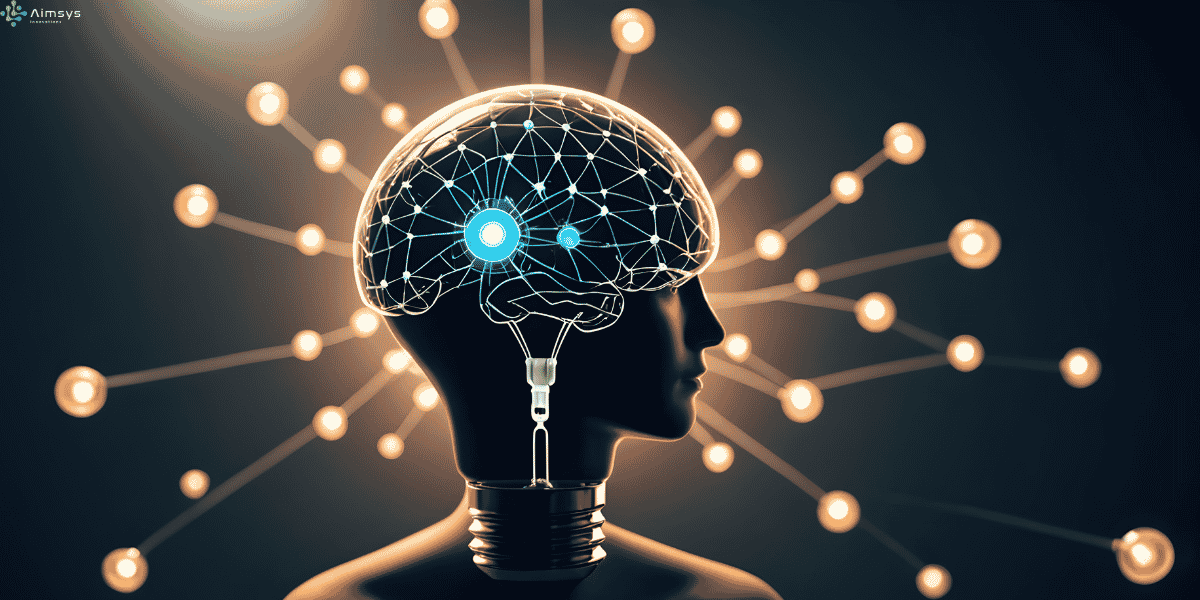
Artificial Intelligence is becoming increasingly capable of analyzing information, recognizing patterns, predicting behavior, and generating responses that appear remarkably human. From customer service assistants to healthcare applications and enterprise copilots, AI is becoming part of everyday interactions.
But an important question remains: Does AI actually understand the human experience?
AI can process language, recognize emotional signals, and learn from enormous amounts of data. It can identify patterns in customer behavior and generate responses that sound empathetic. Yet understanding a human experience involves more than recognizing words or predicting the next response.
Human experiences are shaped by emotions, culture, personal history, relationships, uncertainty, and context. For enterprises, understanding this distinction will become increasingly important as AI moves from behind-the-scenes analytics into direct interactions with customers, employees, and decision-makers.
AI Can Recognize Patterns, But Understanding Is Different
AI systems are exceptionally good at processing large volumes of information.
They can analyze customer conversations, identify sentiment, detect changes in behavior, and recognize recurring patterns across millions of interactions.
For example, an AI system may identify that a customer is frustrated based on language, response time, or repeated complaints. It can then recommend a response designed to address the situation.
However, recognizing frustration is not necessarily the same as understanding why the customer is frustrated.
The underlying reason could involve financial pressure, a previous negative experience, confusion about a product, or an expectation that was not met.
AI can identify signals associated with human emotions, but the deeper meaning behind those emotions often requires context.
This distinction matters when organizations use AI in situations where trust and relationships are important.
The Importance of Context
Human communication rarely exists in isolation.
The same sentence can have completely different meanings depending on the situation.
A customer saying, “That is great,” could genuinely be expressing satisfaction or could be communicating frustration through sarcasm.
A workplace message that appears neutral may carry a different meaning depending on the relationship between the people involved.
Humans naturally use background knowledge, social cues, tone, history, and context to interpret these situations.
AI systems are becoming better at contextual reasoning, but enterprises still need to recognize the limitations of machine-generated interpretation.
The more consequential the interaction, the more important contextual awareness becomes.
Customer Experience Is Becoming an AI Challenge
Customer experience is one of the areas where the difference between prediction and understanding becomes particularly visible.
AI can help enterprises personalize recommendations, answer questions, automate support, and predict customer needs.
These capabilities can significantly improve efficiency.
But excessive automation can also create frustration if customers feel that they are interacting with a system that does not understand their situation.
A customer may not simply want an answer. They may want reassurance, flexibility, or the ability to speak with someone who can understand an unusual circumstance.
This means successful AI-powered customer experience strategies should focus not only on automation but also on knowing when automation should stop.
Human-Centered AI in the Enterprise
The future of enterprise AI does not necessarily involve replacing human interaction.
Instead, it can involve designing systems that enhance human capabilities.
An AI assistant can summarize information before an employee speaks with a customer. An AI system can identify important patterns in a patient's records while leaving critical decisions to medical professionals. An enterprise copilot can help executives analyze complex information while allowing leadership teams to apply judgment and experience.
This approach creates a partnership between humans and AI.
AI provides speed, scale, and analytical capabilities.
Humans provide context, empathy, accountability, and judgment.
The strongest enterprise applications will combine these strengths rather than assuming one can completely replace the other.
Can AI Develop Emotional Intelligence?
AI can increasingly recognize emotional signals.
Natural-language systems can analyze tone, sentiment, word choice, conversation patterns, and other indicators to estimate how someone may be feeling.
This can be useful for customer service, employee support, marketing, and other applications.
But emotional recognition is different from emotional experience.
AI does not experience disappointment, excitement, fear, uncertainty, or empathy in the same way humans do.
It can generate language that appears empathetic because it has learned patterns associated with empathetic communication.
For enterprises, this distinction should influence how AI systems are designed and presented to users.
Organizations should avoid creating unrealistic expectations that an AI system possesses human emotional understanding.
Why Human Oversight Still Matters
As AI becomes more capable, human oversight remains important, particularly in high-impact situations.
Decisions involving employment, healthcare, finance, customer disputes, or sensitive personal circumstances can have consequences that extend beyond the information available to an algorithm.
An AI system may recommend an action based on available data, but a human decision-maker may recognize circumstances that the system cannot fully evaluate.
Human oversight can provide an additional layer of context and accountability.
Instead of asking whether AI should make a decision independently, organizations should consider which parts of the decision AI should support and where human judgment should remain essential.
Designing AI Around Human Needs
Human-centered AI starts with understanding the people who will interact with the technology.
Organizations should ask several questions before deploying AI into customer or employee experiences.
What problem is the user actually trying to solve?
What information does the user need?
Where could automation create friction?
When might a user need human assistance?
What happens when the AI gets something wrong?
These questions shift the focus from technological capability to practical human value.
An AI system can be technically impressive and still deliver a poor experience if it creates unnecessary complexity.
AI and Employee Experience
The human experience is not limited to customers.
Employees are increasingly interacting with AI tools throughout their workday.
AI can summarize meetings, draft communications, analyze documents, automate repetitive processes, and provide decision support.
When implemented thoughtfully, these capabilities can reduce administrative work and allow employees to focus on higher-value activities.
However, organizations should also consider how AI affects employee autonomy, trust, workload, and job satisfaction.
If employees feel that AI is being introduced solely for surveillance or cost reduction, adoption may suffer.
If employees see AI as a tool that helps them perform their jobs more effectively, adoption can become much stronger.
Building Trust Into AI Experiences
Trust will become one of the most important factors in enterprise AI adoption.
Users need to understand when they are interacting with AI, what information the system uses, and how decisions are generated.
Organizations should also provide appropriate mechanisms for correction, escalation, and human intervention.
Transparency does not require explaining every technical detail of an AI model.
It means giving users enough information to understand the system's role and limitations.
When people know what AI can and cannot do, they can develop more realistic expectations.
Measuring Human Impact
Traditional AI metrics often focus on technical performance.
Enterprises may measure accuracy, response time, model performance, or processing efficiency.
These metrics are important, but they do not provide a complete picture.
Organizations should also evaluate human outcomes.
Are customers more satisfied?
Are employees spending less time on repetitive work?
Are users able to resolve problems faster?
Has trust increased or decreased?
Are people more comfortable interacting with the system?
These measures help enterprises determine whether AI is actually improving the human experience rather than simply increasing automation.
The Strategic Role of CEOs and CTOs
For CEOs, human-centered AI represents an opportunity to connect technological innovation with long-term customer and employee value.
For CTOs, it requires building AI architectures that support security, governance, transparency, monitoring, and human intervention.
Leadership teams should resist the temptation to measure AI success only by how much work can be automated.
The more meaningful question is whether AI enables people to accomplish important outcomes more effectively.
This perspective can lead to more sustainable AI adoption.
The Future of AI and Human Experience
AI will continue to become better at interpreting language, behavior, context, and emotional signals.
Future systems may become increasingly capable of adapting their responses to individual preferences and circumstances.
Yet greater sophistication does not eliminate the importance of human judgment.
The most valuable enterprise AI systems may not be those that attempt to appear completely human.
Instead, they may be the systems that clearly understand their role: support people, reduce friction, provide useful intelligence, and know when human involvement matters.
Conclusion
Does AI understand the human experience?
AI can recognize patterns associated with human behavior, interpret language, identify emotional signals, and respond with remarkable sophistication.
But human experience is deeper than data patterns.
It involves context, relationships, emotions, values, personal history, and circumstances that cannot always be captured completely by algorithms.
For enterprises, the future should therefore not be about making AI pretend to be human.
It should be about making AI more useful to humans.
Organizations that combine AI's ability to process information at scale with human empathy, judgment, and accountability will be better positioned to build trusted customer experiences, stronger employee experiences, and more responsible AI strategies.
The real opportunity is not to create AI that replaces the human experience, but to create AI that understands where technology ends and human judgment begins.