






Posted At: Aug 07, 2026 - 44 Views
The Next Frontier of AI Isn't Digital—It's Biological
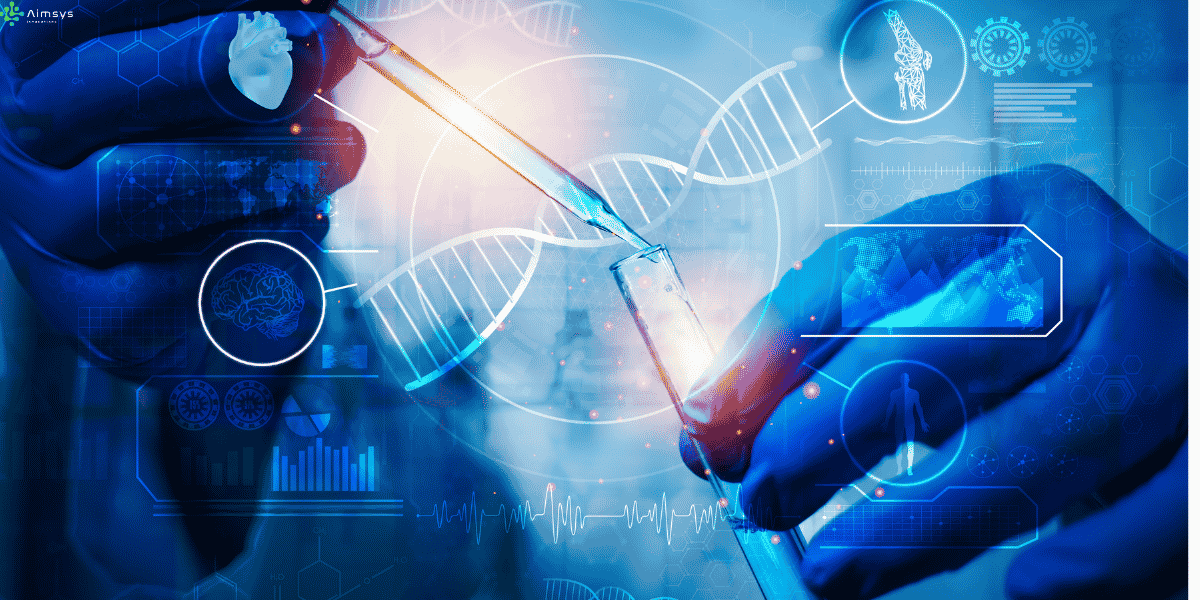
Artificial Intelligence is expanding beyond traditional digital applications and opening new possibilities in biological research. Scientists are increasingly using AI to study proteins, understand molecular interactions, accelerate drug discovery, improve genetic research, and support the development of next-generation biological systems. Instead of relying solely on conventional research methods, AI enables researchers to analyze complex biological data faster and identify promising solutions with greater accuracy.
For enterprise leaders, this represents more than a scientific breakthrough. It signals a new era where biology and AI work together to accelerate innovation across industries. From healthcare and life sciences to agriculture, manufacturing, and sustainability, organizations can use AI-driven biological research to improve efficiency, shorten development cycles, and create innovative products that address real-world challenges.
When Biology Becomes Programmable
Biological research has traditionally relied on years of laboratory experimentation, repeated testing, and extensive trial-and-error processes. While these methods remain essential, they are often time-consuming and resource intensive.
Artificial Intelligence is changing this approach by allowing researchers to simulate biological behavior before physical experiments begin. AI models can analyze enormous biological datasets, recognize hidden relationships, and predict how proteins, enzymes, cells, or genetic sequences may behave under different conditions.
Instead of testing thousands of possibilities manually, researchers can identify the most promising candidates within hours, significantly reducing development timelines while improving research efficiency.
This shift is transforming biology from a purely experimental science into a discipline increasingly supported by intelligent computation and predictive modeling.
From Data to Discovery
Modern biological research generates enormous volumes of data, from genomic sequences and protein structures to laboratory results and clinical observations. Extracting meaningful insights from this information using traditional methods can be both time-consuming and resource intensive.
Artificial Intelligence transforms this process by analyzing complex biological datasets at remarkable speed and scale. AI can identify hidden patterns, predict biological interactions, and recommend the most promising research pathways before physical experiments even begin. This enables researchers to focus their efforts on high-value discoveries, reduce unnecessary experimentation, and make more informed scientific decisions.
For enterprises, this data-driven approach accelerates innovation while improving research efficiency and reducing development costs.
Innovation at the Speed of Algorithms
One of the greatest advantages of AI-generated biological systems is the speed at which innovation can occur.
Complex biological problems that once required months—or even years—of research can now be explored through AI-assisted simulations and predictive analysis. Scientists can evaluate millions of molecular combinations, optimize biological designs, and prioritize the most promising solutions before entering the laboratory.
For enterprises, faster discovery means shorter research cycles, reduced development costs, and quicker commercialization of new products.
Whether developing next-generation therapeutics, sustainable biomaterials, precision agriculture solutions, or advanced industrial enzymes, AI enables organizations to move from concept to innovation with unprecedented efficiency.
In highly competitive industries, accelerating research is no longer simply a scientific achievement—it is becoming a significant competitive advantage.
From Research Breakthroughs to Commercial Impact
Scientific discovery creates value only when it can be translated into real-world solutions. AI is helping organizations bridge the gap between laboratory research and commercial success by shortening development timelines and improving decision-making throughout the innovation lifecycle.
Whether developing advanced therapeutics, sustainable biomaterials, precision agriculture technologies, or next-generation industrial enzymes, AI helps organizations identify commercially viable opportunities faster. This allows enterprises to bring innovative products to market more quickly, respond to changing customer demands, and strengthen their competitive position.
As research cycles become shorter and product development becomes more efficient, AI is turning scientific breakthroughs into measurable business outcomes.
Beyond Healthcare: Where Enterprise Value Is Emerging
Although healthcare receives much of the attention surrounding biological AI, the technology's impact extends far beyond hospitals and pharmaceutical research.
Organizations across multiple industries are exploring how AI-generated biological systems can create measurable business value.
Life Sciences and Pharmaceuticals
AI accelerates target identification, drug discovery, clinical research, and precision medicine while helping reduce research costs and development timelines.
Agriculture
Researchers are using AI to develop climate-resilient crops, improve seed performance, optimize plant genetics, and enhance food security through smarter biological innovation.
Industrial Biotechnology
Manufacturers are designing sustainable biological alternatives for chemicals, biofuels, advanced materials, and industrial processes that reduce environmental impact.
Environmental Sustainability
AI supports the development of biological solutions capable of improving waste management, pollution control, carbon capture, and ecosystem restoration.
This growing diversity of applications demonstrates that AI-generated biological systems are not limited to scientific laboratories—they are becoming valuable enterprise assets across multiple sectors.
Intelligence Meets Living Systems
The true breakthrough lies not simply in applying AI to biology, but in creating a continuous collaboration between computational intelligence and living systems.
AI can process vast biological datasets, recognize complex patterns, and generate predictions that help researchers make more informed decisions. Scientists then validate these insights through laboratory testing, creating a feedback loop where every experiment improves future AI models.
This partnership allows organizations to innovate more intelligently while reducing uncertainty throughout the research process.
Rather than replacing scientific expertise, AI expands researchers' ability to explore possibilities that would be difficult—or impossible—to identify using conventional methods alone.
Innovation Demands Responsibility
As AI-generated biological systems become more advanced, innovation must be accompanied by strong governance and ethical responsibility.
Unlike traditional software applications, biological innovations can have long-term implications for human health, environmental sustainability, and public safety. This makes transparency, scientific validation, regulatory compliance, and responsible development essential throughout the innovation lifecycle.
Organizations should establish governance frameworks that encourage collaboration between scientists, AI engineers, business leaders, and regulatory experts. By embedding accountability into research and development, enterprises can accelerate innovation while maintaining public trust and meeting evolving global standards.
Responsible innovation is not a barrier to progress—it is what enables progress to scale safely.
Building Enterprise Readiness for Bio-AI
Successfully adopting AI in biological research requires more than implementing advanced algorithms. Enterprises need a strong digital foundation that connects research data, computational infrastructure, laboratory systems, and multidisciplinary expertise.
Organizations investing in cloud computing, high-performance computing, secure data platforms, and AI-powered research environments will be better equipped to accelerate biological innovation.
Equally important is fostering collaboration across scientific, technical, and business teams. When researchers, AI specialists, and decision-makers work within a unified innovation ecosystem, organizations can shorten development cycles, improve research accuracy, and bring new discoveries to market more efficiently.
Bio-AI is not simply a technology investment—it is an enterprise transformation initiative that reshapes how innovation is created and delivered.
Preparing Enterprises for the Bio-AI Era
Successfully adopting AI-generated biological systems requires more than advanced technology. Organizations must build an innovation ecosystem that combines scientific expertise, digital infrastructure, responsible governance, and cross-functional collaboration.
Enterprises should invest in secure data platforms, cloud computing, AI-powered research environments, and skilled multidisciplinary teams capable of combining biology with computational intelligence. Equally important is establishing governance frameworks that promote transparency, ethical development, and regulatory compliance.
The organizations that prepare today will be better positioned to accelerate innovation, adapt to emerging scientific opportunities, and lead the next generation of Bio-AI transformation.
The Competitive Race Is Moving Toward Bio-AI
The next wave of enterprise innovation will be driven by organizations that successfully combine biological science with Artificial Intelligence.
Companies investing in AI-assisted research today are creating faster discovery pipelines, improving product development, and identifying opportunities that were previously beyond reach.
Whether designing sustainable materials, advancing precision medicine, developing climate-resilient agricultural solutions, or optimizing industrial biotechnology, Bio-AI is creating new possibilities across multiple industries.
The organizations that embrace this shift early will gain a strategic advantage by bringing innovative solutions to market faster while improving research productivity and operational efficiency.
Designing the Next Era of Biological Intelligence
The future of biological innovation will not be defined solely by laboratory breakthroughs. It will be shaped by how effectively organizations integrate AI into every stage of research, development, testing, and commercialization.
As AI models become more sophisticated, they will increasingly support scientists in exploring complex biological systems, identifying new therapeutic opportunities, optimizing manufacturing processes, and developing sustainable biological solutions.
Rather than replacing scientific expertise, AI will become an intelligent research partner that enables faster discovery, better decision-making, and more efficient innovation.
This convergence of biology and artificial intelligence represents one of the most significant technological shifts of the coming decade, opening new opportunities for enterprises willing to invest in responsible and intelligent innovation.
Final Perspective
Artificial Intelligence is redefining what is possible in biological research. From accelerating drug discovery and engineering advanced proteins to improving agricultural resilience and enabling sustainable manufacturing, AI-generated biological systems are transforming how innovation is imagined and delivered.
The future belongs to enterprises that see biology not only as a science, but as a platform for intelligent, data-driven transformation.