






Posted At: Sep 30, 2026 - 38 Views
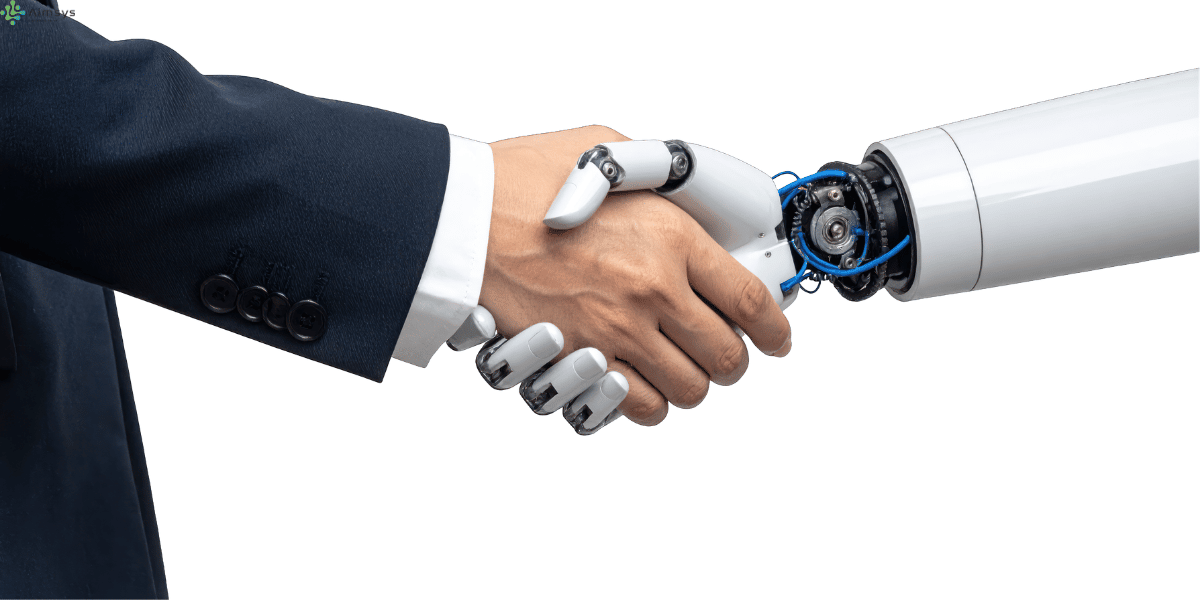
For years, productivity has been measured through familiar metrics such as hours worked, tasks completed, output per employee, utilization, and operational efficiency. These measurements were designed for a workplace where most tasks were performed directly by people and technology mainly acted as a supporting tool.
AI is changing that model.
Generative AI, AI assistants, automation tools, and intelligent systems are becoming part of everyday workflows. Employees can now use AI to analyze information, summarize documents, generate content, write code, research topics, automate repetitive activities, and support decision-making. As a result, the amount of work completed can no longer be understood simply by looking at human effort or time spent.
This creates a new productivity question: How should organizations measure performance when humans and AI are working together?
The answer requires moving beyond traditional activity-based KPIs and focusing more on outcomes, quality, efficiency, and the value created through human-AI collaboration.
Why Traditional Productivity Metrics Are Changing
Traditional productivity measurements often focus on how much work is completed within a specific period. An employee who completes more tasks in less time may be considered more productive. While this approach can still be useful, it becomes less effective when AI starts performing part of the workload.
For example, imagine a process that previously required four hours of manual work. With AI assistance, the same process may take one hour. Measuring productivity only through hours worked could make the new process appear less significant because less human time is being spent.
In reality, the organization has gained three hours of additional capacity. That time can potentially be used for customer support, creative work, analysis, innovation, problem-solving, or other higher-value activities.
This means productivity is gradually shifting from measuring effort to measuring outcomes.
AI Is Changing the Meaning of Productivity
AI does not simply help people complete existing tasks faster. It can also change how work itself is performed.
A customer-service employee, for example, may previously have spent significant time searching through documents before responding to a customer. An AI assistant can quickly identify relevant information and provide a summary, allowing the employee to focus more on understanding the customer's situation and providing an appropriate solution.
Similarly, a marketing team can use AI to analyze customer information, create content variations, and support campaign planning. Developers can use AI for coding assistance, testing, documentation, and debugging. Analysts can use AI to summarize large datasets and identify patterns that may require further investigation.
In these situations, productivity is not simply about completing more tasks. It is about creating better outcomes with the same or fewer resources.
Measure Results, Not Just AI Activity
One of the biggest challenges with AI productivity is distinguishing between AI usage and actual business value.
An organization can measure how many employees use an AI tool, how many prompts are submitted, or how many AI-generated documents are created. These metrics can help understand adoption, but they do not necessarily show whether AI is improving productivity.
The more meaningful question is what changed because AI was introduced.
Did processes become faster? Did quality improve? Did errors decrease? Did employees gain more time for important work? Did customer response times improve? Did the cost of completing a process decrease?
These types of questions connect AI usage to measurable outcomes.
For example, instead of measuring how many AI-generated customer responses are created, it may be more useful to measure average response time, resolution rate, customer satisfaction, and the amount of manual work required to resolve an issue.
Time Saved Is Only the Beginning
Time saved through AI can also create opportunities for employees to focus on activities that require deeper thinking and collaboration. Instead of spending most of their time on repetitive administrative work, employees can use that additional capacity for problem-solving, customer interaction, research, and creative activities. This makes capacity creation an important part of measuring AI-enabled productivity.
Time savings are one of the easiest ways to identify the impact of AI. When AI reduces the time required to complete repetitive activities, the organization creates additional capacity.
However, saved time does not automatically equal higher productivity.
Suppose an AI tool saves an employee two hours every day. If those two hours simply disappear without creating additional value, the productivity improvement may be limited. But if that time is redirected toward strategic analysis, customer engagement, product improvement, or creative work, the organization can gain much greater value.
Therefore, productivity measurement should consider both time saved and capacity created.
The important question becomes: What is being done with the time AI gives back?
Human Judgment Still Matters
AI can process information quickly and generate useful outputs, but human judgment remains an important part of the workflow.
AI-generated content may need to be reviewed. Recommendations may need to be validated. Data may require additional context. Important decisions may require human experience and accountability.
This means an effective AI workflow is not necessarily one where humans are removed from the process. Instead, it is one where AI handles activities that it can perform efficiently while people focus on areas where judgment, creativity, communication, and contextual understanding are important.
Productivity should therefore include the quality of human-AI collaboration rather than measuring AI output alone.
Measuring Human + AI Collaboration
Effective collaboration also depends on how well AI fits into the existing workflow. If employees have to constantly switch between different tools or manually transfer information, some of the productivity gains from AI can be lost. AI delivers greater value when it is integrated naturally into the systems and processes employees already use.
A new productivity framework can look at how effectively people and AI systems work together.
For example, organizations can evaluate how much time employees save through AI, how much additional work they can complete, how often AI-generated outputs require correction, and whether the final results meet expected quality standards.
Consider software development. AI may help generate code quickly, but productivity should not be measured simply by the number of lines produced. A better measurement could include development speed, software quality, testing efficiency, defect rates, and time spent solving complex technical problems.
The same principle applies across other functions. More AI-generated output does not necessarily mean more productivity. Better outcomes with appropriate human oversight are a stronger indicator of value.
Quality Must Be Part of the KPI
Speed is important, but speed without quality can create additional problems.
An AI system may allow a team to complete a process twice as fast, but if the number of errors also increases significantly, the organization may end up spending more time correcting those mistakes.
For this reason, productivity metrics should balance efficiency with quality.
Accuracy, error rates, customer satisfaction, rework, compliance, reliability, and human review requirements can provide important context when evaluating AI-enabled workflows.
A process should not be considered more productive simply because it is faster. It should be faster while maintaining or improving the quality of the final outcome.
Redesigning Work Around Human and AI Strengths
AI productivity becomes more meaningful when workflows are redesigned instead of simply adding AI tools to existing processes.
Some activities are highly repetitive and rules-based, making them suitable for automation. Other activities require communication, judgment, creativity, empathy, or complex decision-making and may benefit more from human involvement.
The strongest workflows can combine both.
For example, AI can collect and organize information, identify patterns, prepare a first draft, or recommend possible actions. A person can then review the information, apply context, make decisions, and handle exceptions.
This creates a workflow where each side contributes its strengths rather than forcing AI or people to perform tasks they are not well suited for.
A New Productivity Framework
These measurements should also be considered together rather than individually. Faster work does not necessarily mean better productivity if quality declines, while higher output may have limited value if it creates additional rework. Looking at efficiency, quality, employee capacity, and business outcomes together provides a more balanced understanding of productivity.
A modern productivity framework can bring several measurements together instead of depending on a single KPI.
Business outcomes can measure whether the work contributes to revenue, cost efficiency, customer value, or operational improvements.
Employee productivity can measure time saved, additional capacity, decision speed, and the amount of higher-value work completed.
AI performance can measure accuracy, reliability, adoption, automation levels, and the amount of human correction required.
Quality and risk can measure errors, rework, security concerns, compliance requirements, and customer impact.
Employee experience can measure whether AI actually reduces repetitive work and makes workflows easier or whether it creates additional complexity.
Together, these measurements provide a more complete view of productivity in an AI-enabled workplace.
From Measuring Work to Measuring Value
This shift also changes how teams think about performance. The focus moves away from simply completing a higher number of activities and toward achieving meaningful results. AI can handle repetitive and information-heavy work, while people can spend more time applying experience, judgment, creativity, and context to the final outcome.
The biggest change may be the shift from measuring the amount of work performed to measuring the value created through that work.
An employee using AI may complete fewer manual tasks but contribute significantly more to the final outcome. A development team may produce fewer lines of code while delivering software faster and with fewer defects. A customer-service team may handle fewer repetitive activities while resolving more complex customer issues.
These examples show why traditional activity-based metrics can become misleading when AI becomes part of everyday work.
The focus should increasingly move toward questions such as:
What outcome was achieved?
How much capacity was created?
Did quality improve?
Did the customer experience improve?
Did employees spend more time on meaningful work?
These questions provide a clearer picture of real productivity.
The New Corporate Productivity Equation
The traditional idea of productivity was often based on the relationship between human effort and output. The AI-enabled workplace introduces another variable into that equation.
A more relevant model is:
Human Expertise + AI Capability + Effective Processes = Business Value
AI provides speed, scale, and information-processing capabilities. People provide judgment, creativity, context, and accountability. Well-designed processes connect these capabilities and turn them into measurable outcomes.
When these elements work together, productivity becomes more than doing more work in less time. It becomes the ability to create better results with greater efficiency and stronger use of human capability.
Conclusion
AI is not simply changing the tools people use at work. It is changing how productivity itself needs to be understood.
Traditional KPIs such as output, hours, utilization, and task completion will continue to have value, but they need to be combined with measurements that capture AI leverage, quality, capacity, outcomes, and human contribution.
The goal should not be to measure how much AI is being used. It should be to understand how effectively humans and AI are working together to create measurable value.
As AI becomes increasingly integrated into everyday workflows, the organizations that rethink their productivity metrics will be better positioned to understand where technology is creating genuine impact.
The future of productivity may not be about doing more work.
It may be about creating more value from the work humans and AI can accomplish together.